
Unlike other ethnicities in the U.S., the vast majority of us Asians identify by our specific ethnic backgrounds. The day we go by “Yellow” (the official future color code for the Americanization of Asians in the U.S.) so that we fit neatly among White, Black, and Brown people, I say, “Maybe so, sir, but not today.”
I had to sneak in a Pete “Maverick” Mitchell (Tom Cruise) quote from Top Gun Maverick because sometimes we need a maverick (a person who thinks and acts independently, often refusing to follow the rules, customs, or group expectations).
Much like Sundown’s limited screen time, the supporting Black officer in the original Top Gun outfitted with a Rising Sun helmet, Asians occupy a small slice of the U.S. population, roughly 6 to 7%. Statistically, we get swept into the broad category of “people of color.” But broad labels blur essential details, and I am writing this specifically about being Japanese American. If you are a Japanese national who has ever wondered what that American experience looks like from our perspective, here is a brief, clear-eyed look, with the slang kept to a minimum.
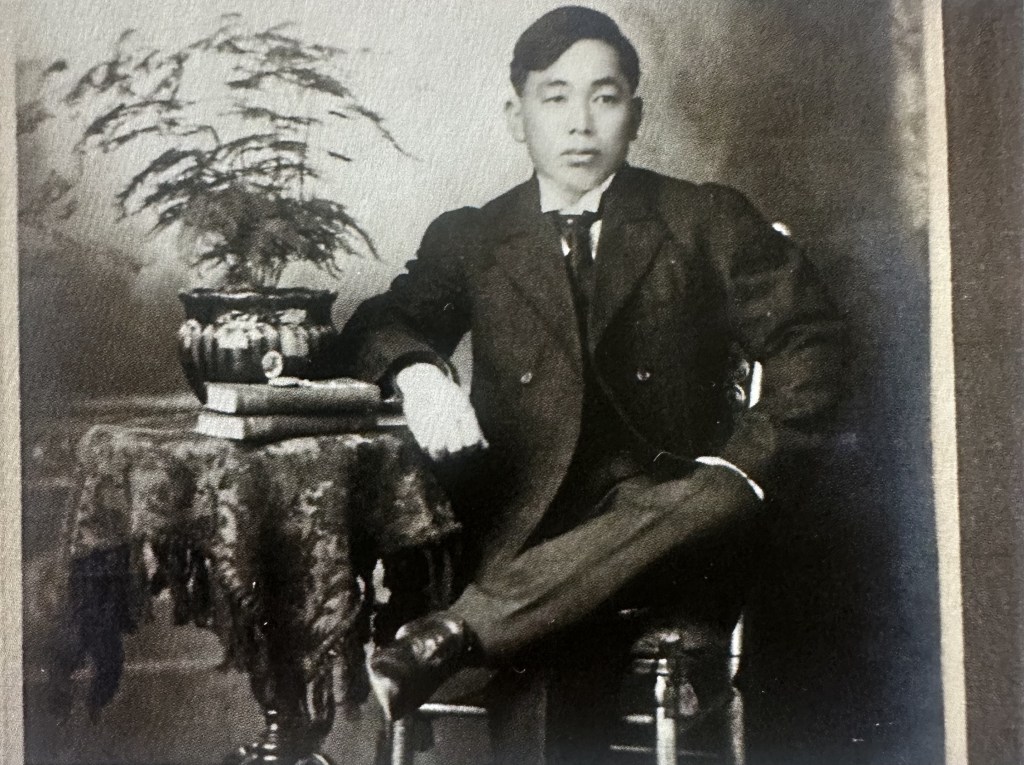
My story as a Sansei/Yonsei, a third- to fourth-generation American of Japanese heritage, begins with my maternal great-grandfather leaving Kumamoto, Japan in the early 1900s. On my paternal grandfather’s side, he was born in Hawaii around the turn of the century, during its transition into a U.S. territory, though I do not know much more beyond that. Then the experiences of my parents diverged in the 1940s during the war. My mom and her six brothers and sisters remained on their farm in Brighton, Colorado. My dad, whose father had worked in the San Joaquin Valley as a skilled craftsman, foreman, or semi-skilled operator according to the internment records, lived with his family in Stockton, in California’s Central Valley. They were all rounded up and placed in a concentration camp for people of Japanese ancestry.
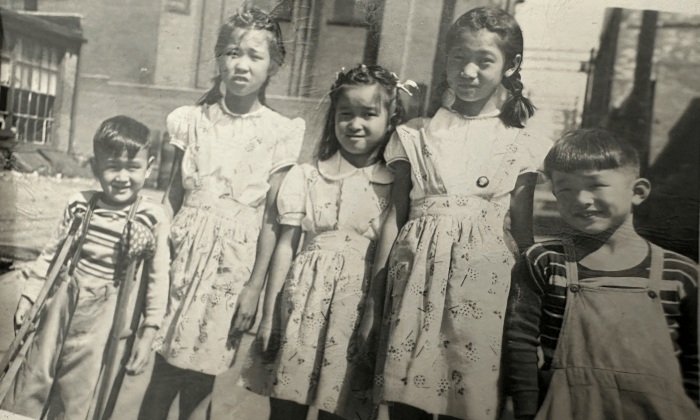
The term often used is “interned,” which refers to locking people up in a prison or camp without a trial, usually during wartime or for political reasons. These facilities were not an ethnic mix of Germans or Italians; from what I know, they were 99.99% Japanese, a concentration camp specifically for Japanese Americans.
We all know how the war played out. Fast-forward to post-WWII: Japanese Americans were released with whatever they had on them. While some neighbors had protected what was left behind, others were not so lucky. Because Governor Ralph L. Carr protected Japanese Americans during the war, my mom and others in Colorado were not interned, making Colorado a safe haven. So when my dad’s family was released from Rohwer, Arkansas, they decided to head to Colorado. Thousands of other Japanese Americans also left the Granada Relocation Center (Camp Amache) in southeastern Colorado and resettled in Denver, the state capital.
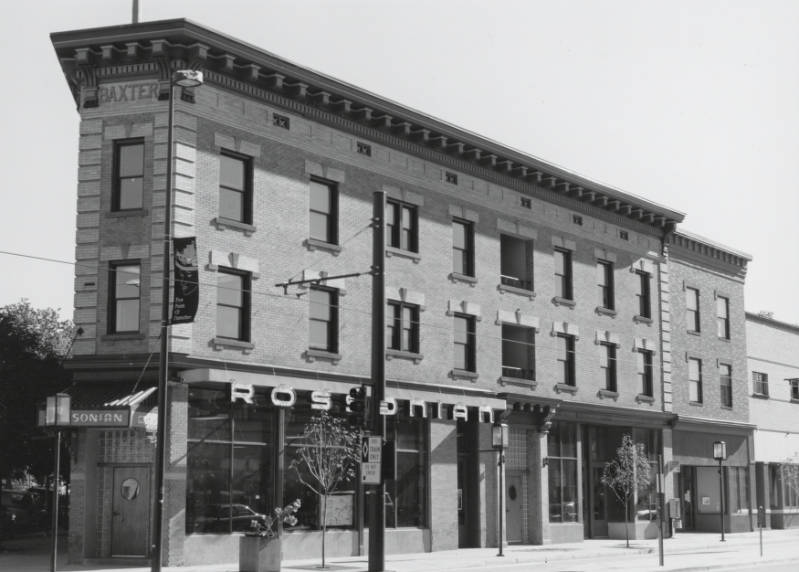
It was these large groups of Japanese Americans that established a large section of downtown Denver off Lawrence Street, which bordered a predominantly Black neighborhood called Five Points, nicknamed “the Harlem of the West.” As in most cities around the country, the Japanese and Black Americans lived side by side. In Los Angeles, this happened in Crenshaw/Leimert Park (The Seinan District), Little Tokyo / Bronzeville, Boyle Heights, and the South Bay (Gardena, Torrance, Compton). In the Bay Area, it was San Francisco’s Fillmore District / Western Addition, and in the East Bay, West Oakland (7th & Market Streets). These neighborhoods didn’t happen for no reason, and it was all due to discrimination via redlining, restrictive covenants, and municipal disinvestment.
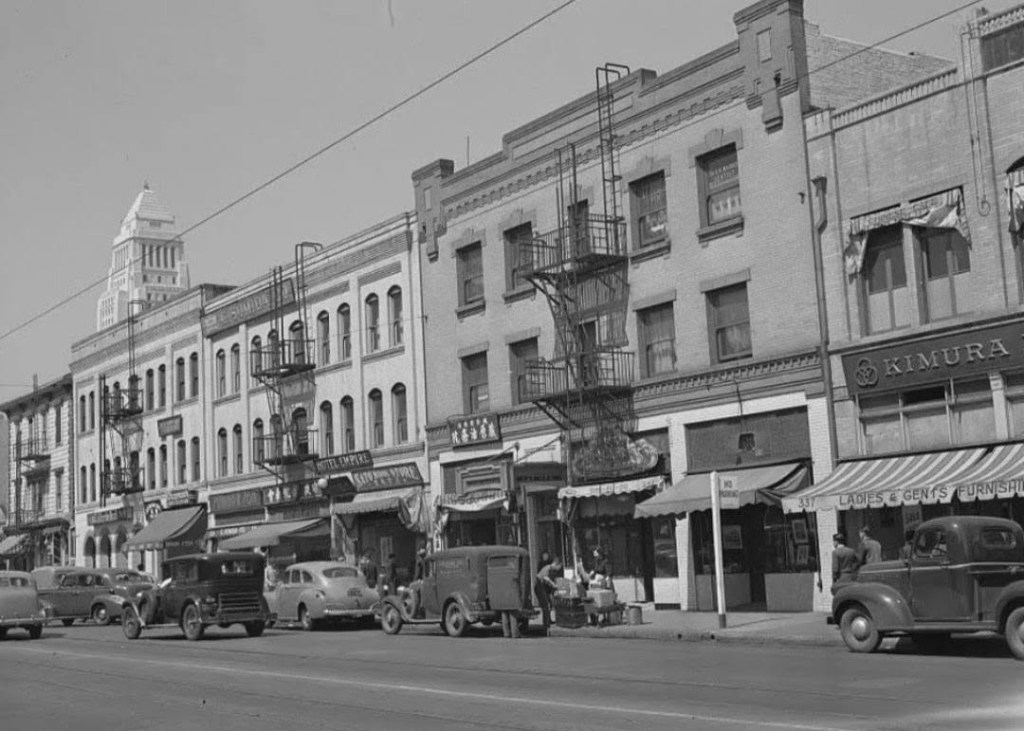
I could go on and on, but covering the regions I am most familiar with allows me to give you the fidelity you won’t read about in a textbook because I try to document the details. Take my dad’s neighborhood: the Skyland area was considered “the hood” for the longest time, and not only is there a Martin Luther King Jr Blvd, but also a street there is named after a notable Black BBQ restaurateur, Bruce Randolph, or “Daddy Bruce.”
I didn’t realize this until decades later, when a Black woman I was dating asked if I grew up around Black people. I had never really thought about it or noticed how my immediate neighbors were Black, along with one Italian family (the DiCarlos). Within a small cluster, my neighbors were Black in an otherwise majority-White neighborhood. Throughout the 1970s and 1980s, U.S. Census data for census tracts covering Hampden South consistently logged white non-Hispanic population shares well above 90% to 95%, yet I grew up next to the daughter of the first Black Division Chief in the history of the Denver Police Department. My other Black neighbors with kids were a large family, the Grahams. Their dad, Tom, was an ex-Denver Bronco, and Jason (R.I.P.), who was my age, had a younger brother, Daniel, who played tight end in the NFL and won two Super Bowl rings. Now, in the 2010s (I remember because Bestia opened in 2012), cities like Los Angeles started gentrifying areas around Little Tokyo and later around my dad’s neighborhood under the BS guise of ‘arts districts.’ In Denver it was RiNo, ‘the trendy River North Art District’ (their words). It’s easier on people’s consciences if you say it’s a bunch of artists, because then it’s ‘hip and cool’ to displace these ghetto foo’s.
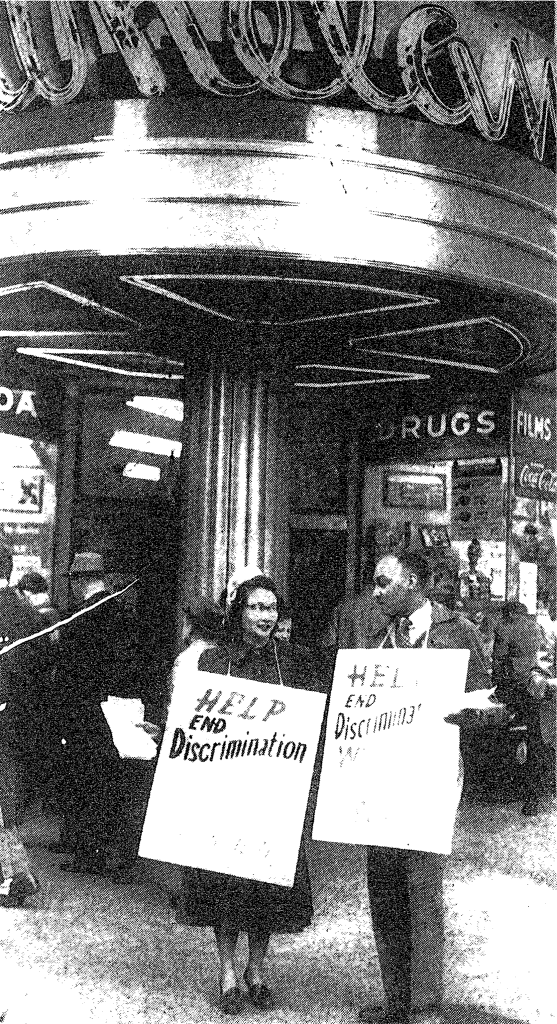
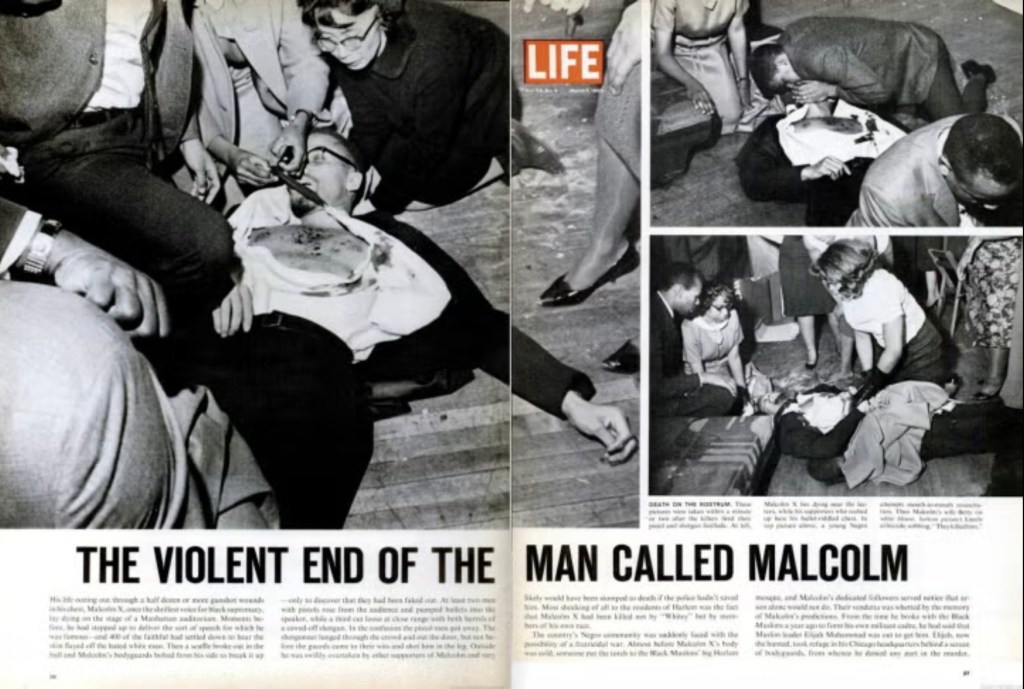
Japanese and Black Americans were not only living side by side in those neighborhoods; they were also side by side in the civil rights movement itself. Due to the incarceration and internment of Japanese Americans, many of the kids of those who were interned became some of the most vocal advocates starting in the ’50s. Among them, there are several notable Japanese Americans, like the controversial Yuri Kochiyama, who was photographed holding Malcolm X after he had been shot. Then there was the Black Panther Richard Aoki, who had served in the US Army (a true patriot in and out of the army) and helped train the Black Panthers, which led to major gun control legislation in the U.S. Marching alongside Martin Luther King was Steven Kiyoshi Kuromiya, a gay Japanese American. Joseph Ishikawa was a local activist in Nebraska, where he challenged a longstanding policy barring African Americans from municipal pools.
Then there is Ina Sugihara, who was in an interracial marriage and has a great quote that goes, “The fate of each minority depends on the extent of justice given all other groups.” That is a quote Black Americans need to be reminded of before saying, “What have all y’all done for Blacks,” because it’s not a zero-sum game, bro. Then there is the legendary Daniel Inouye, whom John Nichols summed up by saying, “No senator fought longer and harder for the rights of people of color, people with disabilities, women and the LGBT community.” On top of all those individuals, even decades later, the very public OJ Simpson trial was presided over by Judge Ito (side by side, again).
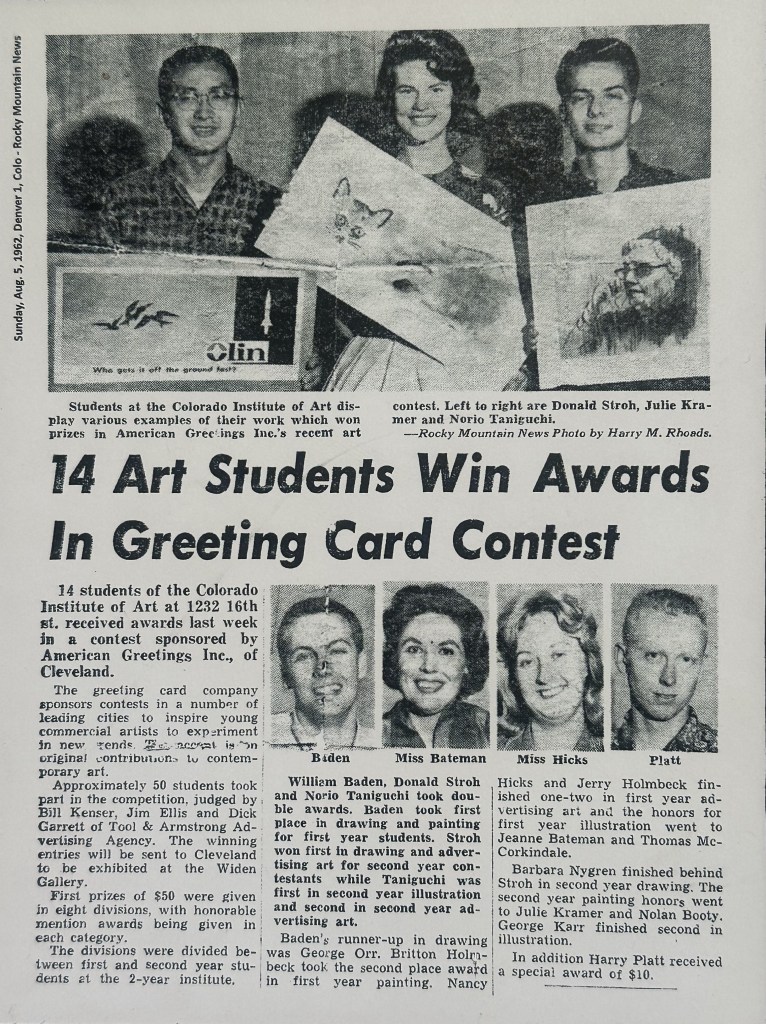
While those public figures fought for our rights on the national stage, that same battle for recognition played out quietly in everyday life. For my dad’s generation, the gatekeepers of opportunity decided whose talents were acknowledged and whose were ignored. Decades later, there was so much I didn’t know about my dad until after he passed away, when someone in my family found a Rocky Mountain News article featuring him and several White students on the front page. Out of all of them, my dad had won two art awards at his art school, versus their one. Except, my dad never went on to work in the art field. He worked in cabin service for United Airlines, handling ground and turnaround operations, which included cabin cleaning and restocking supplies.
You might think, “Well, he just didn’t work hard enough, or he wasn’t talented enough,” but when I initially pursued my Industrial Design degree, I remembered a story that could be lost to history, so I will repeat it. It’s about a very famous Japanese American industrial designer, Larry Shinoda, whom I think I learned about via an ID publication I found at Kinokuniya in San Jose.
His story goes that after getting kicked out of ArtCenter in Los Angeles (partly for drag racing on the street and clashing with instructors, something that reminded me of myself, especially since my goal was also ArtCenter), Shinoda headed to Detroit in the mid-1950s, determined to land a job at the Big Three. He was sitting in a lobby waiting for a scheduled interview. Hours were ticking by, and the hiring staff was essentially ignoring him, letting him chill the eff out in the waiting room while nobody bothered to come out and talk to him. A senior design executive walked through the lobby, saw Shinoda sitting there alone with his portfolio case, and asked what he was doing. Shinoda, never one to mince words, bluntly told him he was waiting for an interview that nobody seemed interested in giving him. The executive asked to see what was in the case. Right there in the lobby, he flipped through Shinoda’s work (filled with radical hot rod concepts, aggressive packaging ideas, and razor-sharp drafting) and realized instantly who he was looking at. He bypassed the interview panel entirely, walked Shinoda into the office, and hired him on the spot.
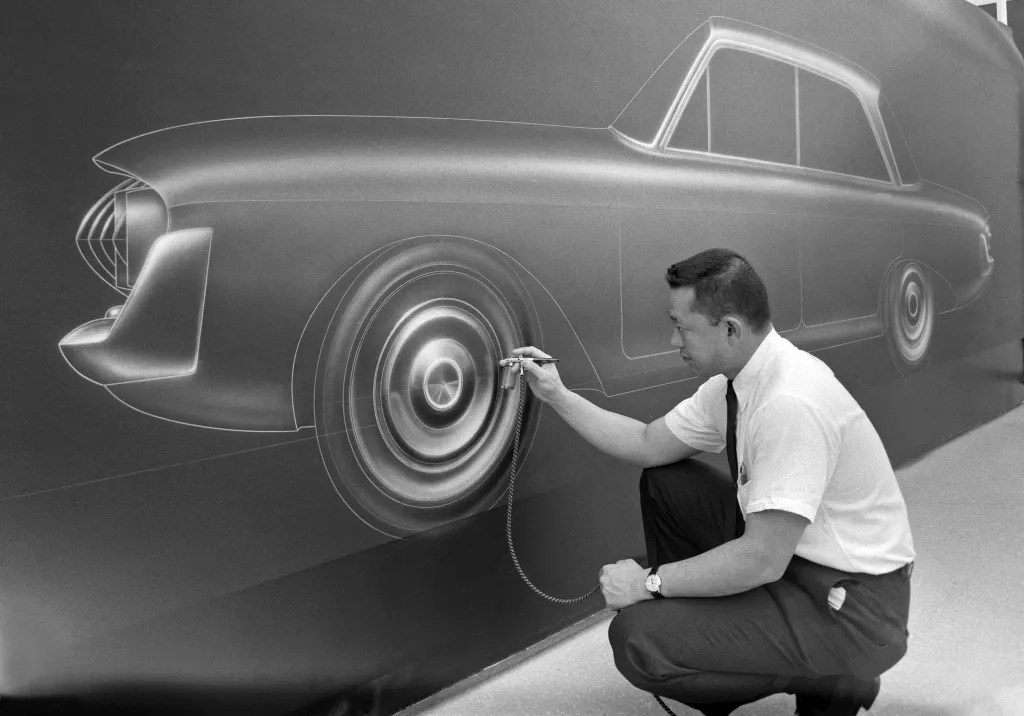
That single chance encounter in a lobby saved what became one of the most iconic careers in American industrial design. It set Shinoda on the path through Packard, GM (where he created the 1963 Corvette Sting Ray (C2) alongside Zora Arkus-Duntov and Bill Mitchell, as well as the CERV concepts), and eventually to Ford, where he penned the Boss 302 Mustang. That path, I initially thought he almost didn’t get it because they dismissed him for being Japanese because there was widespread post-WWII discrimination in the ’50s; however, like many things, it was most likely due to bureaucratic disorganization and recruiter apathy, and I don’t think he ever outright said if it was either or.
So, with my dad, I went down the rabbit hole after seeing the newspaper article. I looked up the names of his fellow students, and one was listed career-wise as Executive/Management, while another had his own design firm and had won awards. After reading that, I could write my dad off as someone who just couldn’t back it up beyond awards in school, and you can say he was probably only cut out for cleaning and janitorial work. But he had hobbies ranging from ice skating, magic, aviation and cars, to judo, where he competed as a black belt with a mantle full of trophies to back it all up. Then again, recognition is granted by whoever holds the power to grant it, arbitrarily, and the person being judged, like my dad, didn’t get a vote who got that chance.
Several decades later, if you come across Asian foreign nationals, aka FOBs (Fresh Off the Boat) or JOJs (Just Off the Jet) as nicknamed by the Asian community, they are either in a professional field via an H-1B visa, or they own and operate some sort of business. Stereotypically, if you’re Cambodian, it’s a donut shop (shout-out to Rya); Korean, a dry cleaner or liquor store (shout-out to Lee, who was actually from HK); Vietnamese, a nail shop (shout-out to Allen and his 6 sisters); and Chinese, it’s restaurants (shout-out to Lee and Bing, Harlan Chan, and Peter Chan). I gave the shout-outs because, beyond the stereotypes, those are actually people I know or family friends, and I kept the list short. Those businesses exist, because they had to create their own opportunities.
Now, if you’re Beth and Hank from Ohio, your first encounter with “Japanese” culture is with your local “hibachi,” or what the Japanese call the cooking style: teppanyaki. Teppanyaki was made famous by a Japanese national, Rocky Aoki, and the success of Benihana. His massive success led to a bunch of copycats, and since not all the ones copying were Japanese, the more diluted the restaurants became from being actually Japanese. Based on various sources, around 90% of all Japanese restaurants in the US are not owned or operated by anyone who is ethnically Japanese. I would add that this is especially or specifically true outside of coastal cities.
Out of all the cities I lived in, Los Angeles is one of the only places I was able to interact with Japanese culture via Japanese restaurants, markets, and other businesses, which is how I learned about omotenashi alongside other aspects of the culture. I did this weekly at local sushi restaurants in San Dimas, to several times a week when I lived in Newport Beach because of its proximity to Costa Mesa which is where many Japanese-owned and operated businesses are located. Elsewhere, the vast majority of Japanese-themed restaurants are Americanized sushi spots primarily owned by Chinese and Koreans because they’re simply opportunities aka businesses.
I have no issue with that because they are businesses, and they are not obligated to provide a cultural experience. However, the ones in Colorado know that their clientele and the community has no clue, so they often market themselves as “authentic.” Phrases like “we do ramen right” are prevalent throughout Colorado, even when the dishes are nothing like actual Japanese food. Corn, raw spinach, and benishoga are added to everything. Chinese and Korean menu, like cheese wontons to kalbi are also typically added, which culturally dilutes everything because if there’s an opportunity to push items that customers don’t know if they’re Chinese, Vietnamese, Japanese, or Thai, they do it. Same mechanism again, whoever owns the business gets to define what “authentic” means, and the people who’d actually know don’t get consulted (I foolishly thought at one time, the internet would be consulted upon, except it only made it worse).
There is the cultural dilution via the menu, but the worst cases involve behavior. This ranges from the dude who chases after a customer demanding a tip (Kenny Chou, the owner of Table to Stix Ramen) to the absolute worst, like Nori Japan.
I could tell the spot was clearly Chinese-owned, but to the masses, based on the name, they are Japanese. The business, operating at the Fox Valley Mall in Illinois, led to accusations of racism after a cook refused service to Black customers and made a racially generalized remark: “You all have same face.” News outlets generically cited “a cook,” but all the headlines had “Japanese” and “Japan” in them, which creates a lot of negative animosity about Japanese people being racist.
This is not an isolated incident. Even when a Chinese money mule (Case: United States v. Jiandong Chen, Case No. 24-cr-1317-RSH-02, U.S. District Court for the Southern District of California) got caught by law enforcement for scamming Americans, he initially tried to use a Japanese name to gain favor. None of this gets called out from inside the community, because Japanese are a minority even among Asians in the US. Whoever controls the name gets to decide what counts as Japanese, and the people who’d actually know aren’t the ones being asked.
Blurring the lines between Chinese and Japanese is something the far-left does, as they dismiss culture under the belief that “everyone is the same or equal.” When you generically identify as White and carry a major moral supremacy complex, you are oblivious to the importance of culture and the fact that Asia is not a monolith. On top of that, there are the anecdotal receipts from an ex-homie who had worked at Sushi Den, the dominant Japanese-owned and operated sushi spot in Denver. He would tell me all the time how often he got asked for hot and sour soup, and when he said that was Chinese, they would reply, “Yeah, what’s the difference?”
Unfortunately, there are all too many Americans who know nothing about Asia or Asian Americans. Compounding the problem, while the Karate Kid franchise helped to elevate my popularity in the mid-’80s, I also had to contend with the humiliation of Long Duk Dong that same year (a nerdy Chinese exchange student played by the Japanese American actor Gedde Watanabe).
Some four decades later, in 2025, Jackie Chan and everyone involved with the latest movie had no issue culturally appropriating Japanese culture by conflating it with China and Chinese kung fu. They did this by using the franchise name versus starting their own, like under the Kung Fu Kid, which would have let it stand on its own merits. If that had happened the other way around, it would have created so much backlash that the large Chinese community would have had the movie shut down.
Not only that, every far-leftist will justify it by flexing that they’re educated, always randomly bringing up history because they think they’re “smart.” They claim it’s okay because of “what Japan did to China,” just like looting and rioting are okay because “they’re oppressed.” It’s all mental gymnastics. Maybe I need to go for gold and flex by pulling the internment card, something most liberal arts majors seem to be oblivious to.
Further compounding the issues to the greater community, especially during the pandemic, from 2022 to 2023, you have the Stop Asian Hate “trend” which was another worthy social justice issue, until every offender assaulting random Asians turned out to be Black. This is no bueno in the oppression olympics because the moral supremacists deem Asians irrelevant when it comes down to Asians being discriminated against for college admittance, where to dump the homeless when the World Cup comes to town, but also with DEI which means Diversity, Equity, and Inclusion, it means Blacks and Latinos, and some Asians, meaning Southeast Asians and not Japanese are favored. Who decides Japanese Americans don’t count as needing inclusion? Same mechanism, majority defines the category, you don’t get a vote in your own classification.
This issue extends far beyond domestic U.S. policy. When the dominant American majority dictates these classifications, those same flawed definitions get exported to the rest of the world. I write about this in my manuscript because I want Japanese nationals to realize that this isn’t just an American problem. The intelligence powering artificial intelligence (AI) is being built primarily on these exact American datasets and cultural assumptions.
Back in 1868, Japan faced a similar influx of Western ideology. Triggered by the arrival of Western powers, the Japanese made a clear-eyed strategic decision that led to rapid modernization, choosing not to blindly embrace everything the West was about. Instead, they took on a hybrid approach: “Japanese spirit, Western technology” (wakon yōsai).
158 years later, in 2026, it is once again a strong culture of mavericks that led to Japan putting Japan first over globalization, and the 92.4% support that Prime Minister Sanae Takaichi received from Japanese youth is considered and promoted by the West as right-wing. Yet, over a third of those young voters actually describe themselves as “liberal,” and if you asked them if they are right-wing (uyoku), they would tell you no. Unfortunately, the majority decides, or the ones controlling a technology decide what the label means. Us Americans have decided “right-wing” means what Takaichi’s voters are, and that the second-largest group of users on X, which are Japanese nationals, are all right-wing.
If you think this is ridiculous, I attended the BLM march in Denver, and it was not predominantly Black; it was primarily White “liberal” Americans. Nationwide, over 95% of U.S. counties that held George Floyd protests were majority-White. Ok, that’s by county, however if you use location-tracking data from four major cities during the George Floyd protests found White attendees made up the clear majority on the ground, from 76% in Atlanta and New York to 85% in Minneapolis. A separate national Pew survey put White protesters at 46% of the total, still the single largest group, even though White adults make up 64% of the country. The people who show up to define a movement aren’t the people the movement claims to center, same mechanism as everywhere else.
If you do not try to speak up, or do not do something about it in the US, we are only as multicultural as the others or the majority deems you to be. Facts do not determine your place in American culture, and it does not matter if Japanese call it teppanyaki, Americans will call it hibachi and banzai and bonsai are the same because, hey “they’re loan words, we call the shots.” So, if the United States were a restaurant, it’d have a Mexican cook, a Chinese owner, a primarily White clientele, all while hyping authentic Japanese sushi, which puts out, a makizushi roll with a cooked gochujang salmon, cucumber, cream cheese, and topped off with Japanese mayo and sriracha sauce, wonton chips, and jalapenos. Demographics, geography, culinary culture, and the media, it’s a systemic habit of the dominant actors dictating what other cultures are allowed to be.
This same habit of dominant actors deciding the terms extends beyond culture and cuisine into the allocation of public attention itself. Public discourse and political debate are not distributed according to demographic size or actual impact on people’s lives. Consider that while transgender individuals represent less than 1% of the population, the volume of political discourse generated by this topic far exceeds the attention given to issues affecting much larger groups, including the Asian American community. The disproportionate focus exists because the issue functions as a visible proxy for broader cultural values, giving advocates a ready stage to virtue signal their moral alignment.
I’m not Yellow (it’s got more than one meaning), so I will continue to document my experience and try my best to depict how the Japanese American experience has been in the US (right now, I’m picturing a feedback form with a “rate your experience” scale with an unhappy face, neutral face, or happy face). From the time the Japanese exclusion was enacted through the Immigration Act of 1924 (the Johnson-Reed Act), which specifically banned Japanese immigrants and was signed on May 26, 1924, this history has been deeply personal. Unlike other history, this history has impacted my family directly, from my great-grandfather and grandfather to the internment of my dad and his family. That is only a couple of generations away.
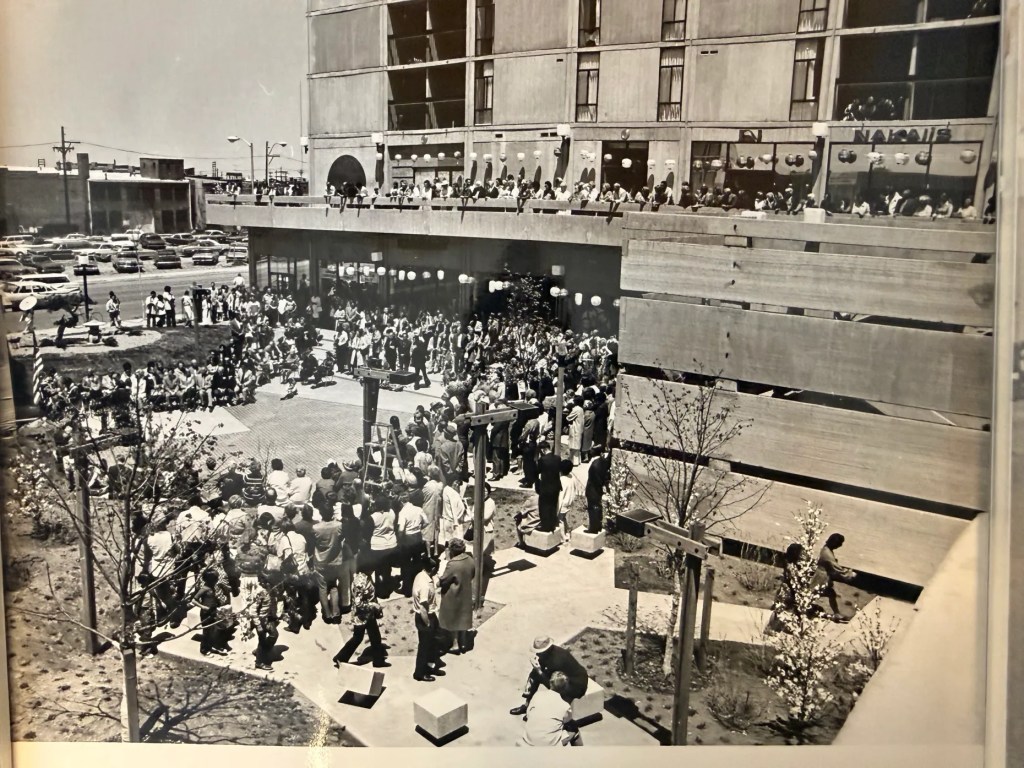
I am glad we no longer have DEI programs because, like the Cobra effect, human bias and bureaucratic posturing always drive the wrong outcomes. When I look at how these top-down frameworks pit communities against each other instead of recognizing how everyday people actually live side-by-side, I think of comedian Theo Von. He gets labeled “far-right” simply for not being far-left, but he has a bit that nails this dynamic:
“My Black friends would always be like, ‘Man, look what you did to us!’ And I’m like, ‘Bro, do you think I would do all that shit to y’all and then move right next door, bro? Now, are we gonna split this plum or not, dog? We’re down here together, dude. You think I took all your shit and just don’t have it? Somebody else has both of our shit, and they’re watching us fight over it.'”
That is exactly how I feel, because Japanese Americans have literally been side-by-side with the Black community, whether in historical working-class districts or as the few minority families on a block. I also think Americans of all races and ethnicities feel the same way, and I don’t dismiss systemic racial and bureaucratic issues. However, I, like many Americans, know that despite adversity, when initiative and merit are put forth, regardless of who you are or where you started, the ones who rise above, lead, and succeed are what define the land of opportunity and us as Americans.
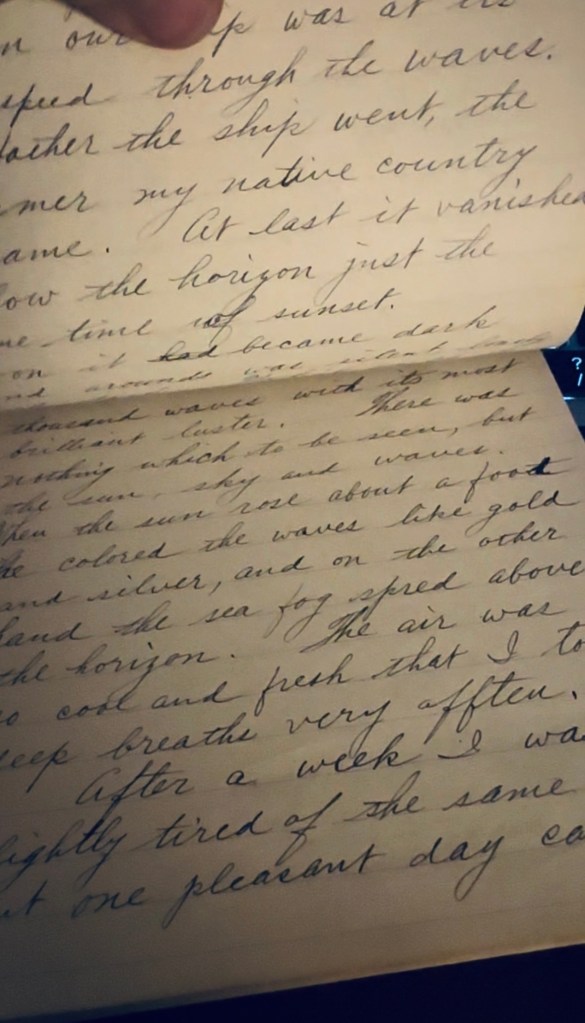
I think back now about the Japanese American experience, including mine and my relatives’, and the maverick-like initiative they took to come to a foreign land, because it puts the American in “Japanese American.” My grandfather had written in his diary (on April 18/28th-May 10th, 1917) while traveling here, surprisingly in both English and Japanese, but I assume his father was not fluent in the language, yet they were all too willing to come here.
From that ship they jumped on, like many other immigrants, to where we all are now after a couple of generations: I do not stroll on by while crossing at a crosswalk, I clean up after myself, I don’t have others waiting for me, and I have several other traits that I have no clue if they are American or Japanese.
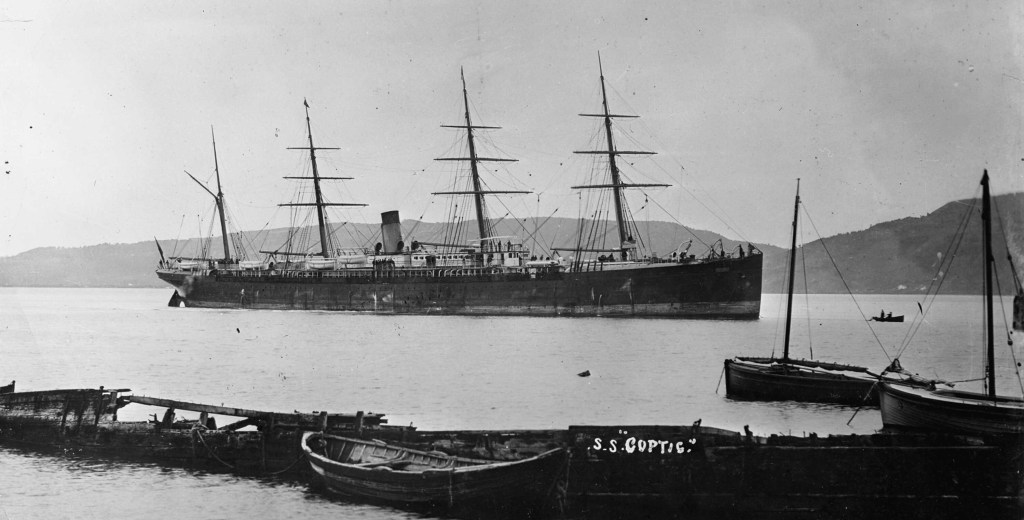
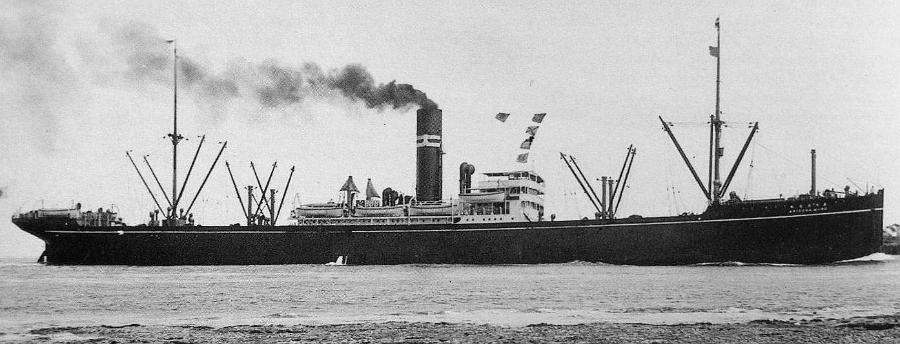
But I love what we Americans stand for, which is liberty (freedom of speech to belief), opportunity (the meritocratic ideal that hard work, grit, and ambition determine our path forward), self-reliance (personal accountability, practical problem-solving), and pluralism, which to me is critical because it means the continuous process of forging a unified civic identity from vastly different origins, cultures, and traditions: “out of many, one.” As an Ameri’CAN, I cannot just accept how others define us, and like a maverick, it’s time to take action.
I play by the rules and as of today, I have finally collected all the necessary paperwork for my teijusha. Like my relatives after 123 years, I am taking a leap. The ship they boarded, I will soon board a plane headed for Japan, not because I am done with the United States, but to find collaborators who can help me push back on who gets to define what it means to be Japanese in the United States. In 1972, my grandfather was awarded the Order of the Sacred Treasure, Fifth Class, for his contributions to U.S.-Japan relations. That same year I was born into the responsibility of that legacy, and that legacy will continue.
Thank you for reading
I just had to include this quote, because the same power that gets to define a people can also choose not to. Carr chose not to.
“An American citizen of Japanese descent has the same rights as any other citizen. If you harm them, you must first harm me. I was brought up in small towns where I knew the shame and dishonor of race hatred. I grew to despise it because it threatened the happiness of you and you and you.”
– Ralph L. Carr (Republican) – 29th Governor of Colorado (1939–1943)
