I would not call them pods or capsules, and I think of them more like kennels, ruff (shhhhh, sorry, no barking or growling).
Even though I am Japanese American and have been to Japan and experienced everything from regular hotels to numerous love hotels, capsule hotels were a completely new experience to me, so I can give you a great first impression.
I also address what happens when a Japanese product, whose functionality is partly dependent on Japanese cultural norms, is introduced into the American market, and what the company would need to understand or change before expanding.
The property I visited opened in the spring of 2025, and it marks the first United States location for the brand First Cabin International, which allied with TKP Corporation in 2016. I had heard about their first location stateside a couple of months prior through their PR blitz in mainstream media, back in February and March of 2025, and my first thought was: I’m glad they chose Hawaii as their first location. Opening in Hawaii is not far off from Japan, or dare I say, Okinawa (don’t get butthurt, my Uchinanchus).
Culturally, it’s a natural stepping stone from Japan to the US, because baby steps are necessary if they hope to expand to the mainland or, in their roundabout words, to target other high-cost urban markets across the United States. However, that step, to me, is not only a 2,500-mile leap to Los Angeles in distance, but it’s equally far culturally.
Oddly or coincidentally, to ground what this content is, I had planned on being in Japan by August, but due to delays with my paperwork, specifically navigating the strict Japanese bureaucratic process of securing a Certificate of Eligibility (COE) as a Sansei Nikkei where even a single misspelled letter on a parent’s birth certificate halts the entire machine, my timeline got pushed. So I decided to route the first leg of my trip through Hawaii instead.
With the shared wisdom of a friend who has 25-plus years with Marriott bouncing around in my head, I booked directly through their website (first-cabin.us), which is often the way to go for the lowest price. Their staff, especially Erica, made the planning effortless despite coordinating across multiple moving parts. I couldn’t say the same if I had used some travel site that locks you in, so I highly suggest booking direct if you’re planning a trip and are considering First Cabin.
Right off, the two biggest selling points that are tied for first place are location and price. Debating which is more enticing is like the age-old choice between Ginger (the glamorous movie star or, in today’s speak, the “baddie,” glam girl, the “cash me outside” type) and Mary Ann (the wholesome farm girl from Kansas who is the relatable girl-next-door/soft-girl type). You might find yourself flip-flopping between the two.
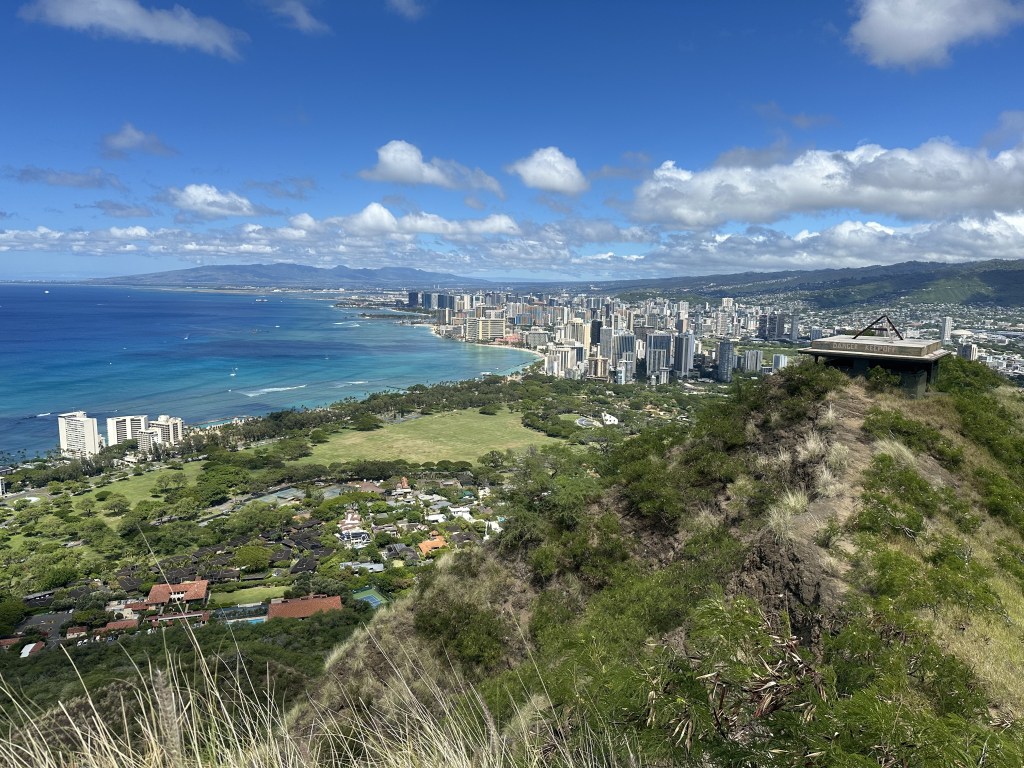
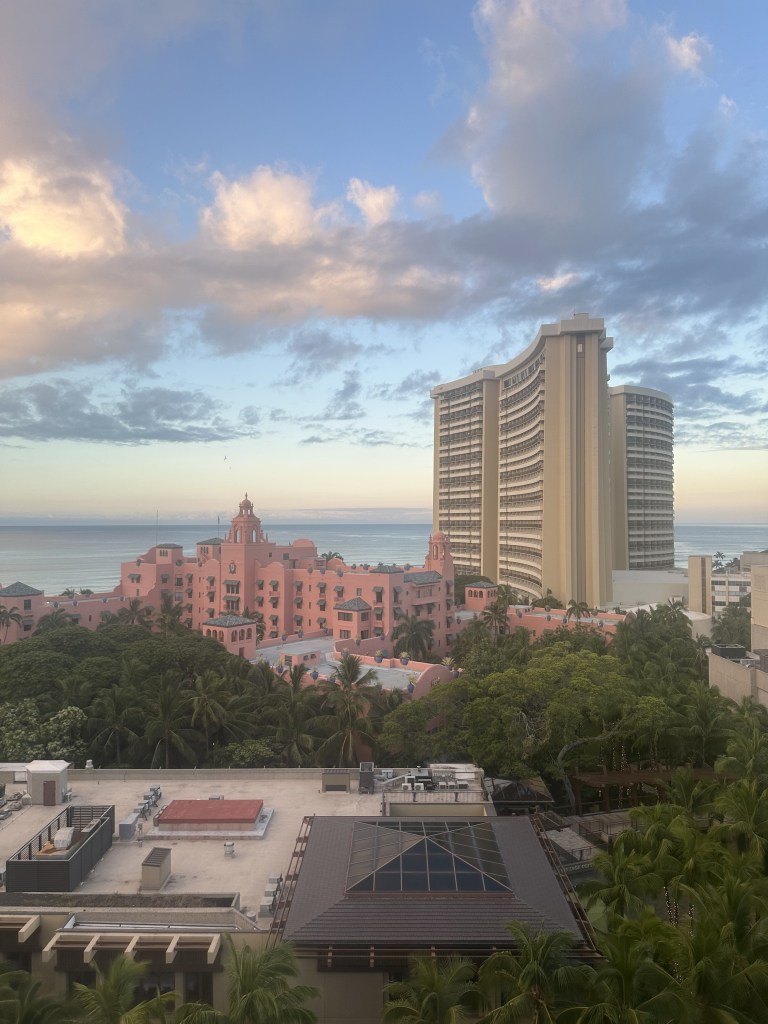
The prices start at $50 a night plus tax at First Cabin versus $170 to $500 in Waikīkī. At that rate, you not only get prime geography, but you’re looking directly over the Royal Hawaiian: the historic landmark known as the Pink Palace of the Pacific, offering beachfront luxury and classic architecture. You are also blocks from the Moana Surfrider: a hotel with Victorian architecture right on the beachfront. There are others, but one is right out front, while the Surfrider is 0.2 miles away, or a 5-minute walk over. It is all purely subjective as to which matters more, but the beach is literally right across the street, through a labyrinth of hotels and shops.
I decided to make the best of it by enjoying four days on Oahu, an island and place I am very familiar with because, as a family, we used to spend multiple summers in Hawaii, since on both sides of my family we have roots there. The last time I had been there was sometime in or around 2014 for Oahu and March of 2016 for Maui, so it had been a decade since my last time on the islands due to COVID and other priorities.
Going back, I was excited but apprehensive about a capsule hotel, since I had initially heard about it in the news. Going with a friend, misery loves company, and she was down for it. I knew it would not be the Aulani, a place I had stayed at before (booked with a local’s kama’aina discount, I should add) that I think matched the cost of the Pelican in Newport Beach, off of PCH on the Newport Coast, near my old hood, but I had hoped at the bare minimum, it was the equivalent of the Airbnb I stayed at on Maui. For the record, I am no fan of Airbnb, and in fact, I despise the company.
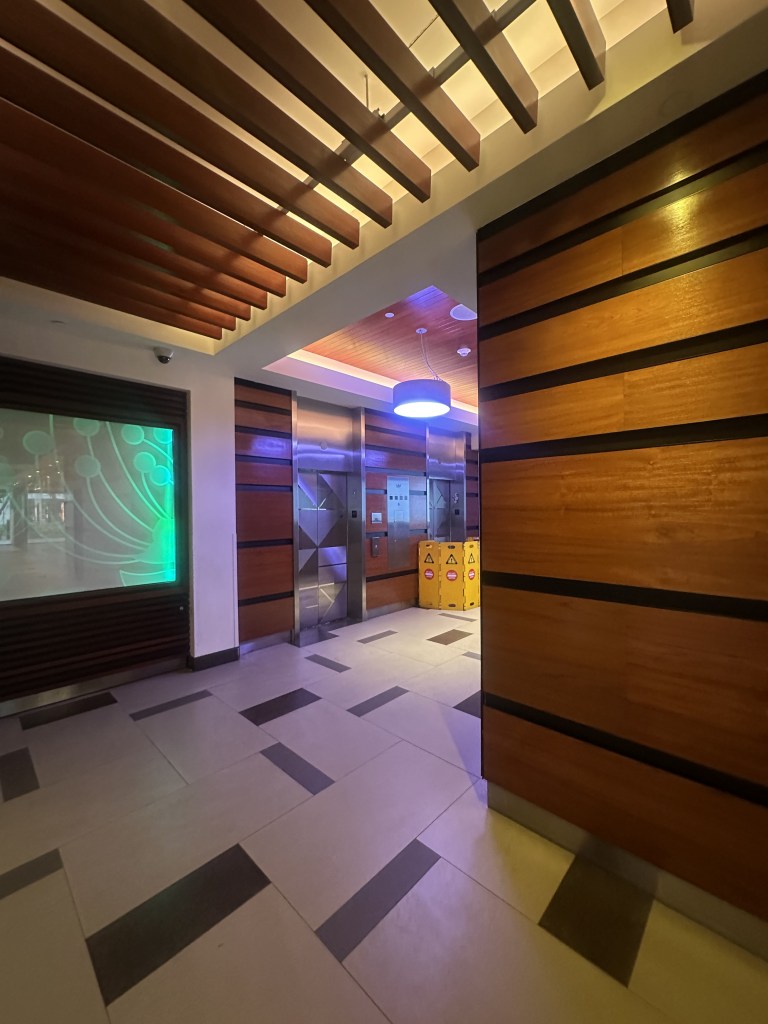
After arriving and taking a Lyft on over, I was dropped right off at Seaside and Kalākaua Ave, which is the heart of Waikiki. The first thing you’ll notice is the H&M on the hard corner, in real estate speak. If you’re lucky, one of the Instagram accounts I had been following for some time that does caricatures, Caricature Party (I had been wondering where they were located all this time) was the first thing I saw, Aaron and Saeme. They’re set up directly out front of the nondescript hallway with the only First Cabin signage located in the hallway, next to the H&M, that leads to the very generic elevator area that doesn’t let you know you have arrived at the right place. The only First Cabin signage, like in Japan, is nonexistent on the front facade, and beyond the hallway signage, there is only a prominent elevator button to let you know which floor they’re on, which is the 14th floor.
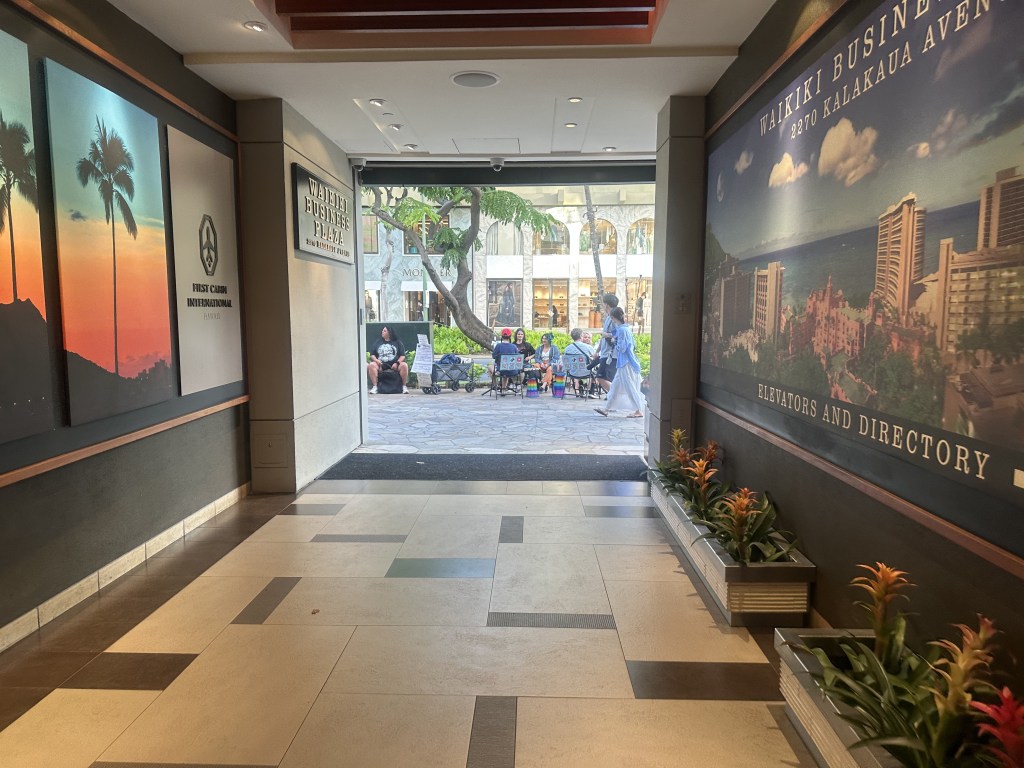
Once on the 14th, if you’re not buzzed through the front doors (most times, they’re on it, and they will cater to your ineptitude like they did with me), you’ll be tugging on the doors because they’re locked. Once in, there’s no grand reception desk, and it’s more like the front counter of an office, a dental clinic, or a Motel 6. The check-in is weird because you’re encouraged to do it beforehand, which requires you to fill out a bunch of information and submit a deposit, along with taking a picture of yourself. That is what I consider the weird part, because it felt like the TSA process.
After I checked in, the first night I stayed in the men’s-only section, and I arrived fairly late, past 11 p.m. After a several-hour flight, I had to quickly orient myself on how to navigate and understand how things worked, which is a challenge after a journey that started at 4:32 p.m. my time, which is +4 hours (or roughly 3 a.m.).
It doesn’t start with a room card, but the integral part of your stay is your personalized 4-digit passcode written down on a piece of paper, which gets you into the necessary sections like your sleeping quarters and the bathroom. By chance, even at this hour, you can tailgate and slip through the door when another person is entering or coming out because holding a door open for someone walking behind you is a standard, reflexive social courtesy with us Americans, because that’s how we are. Whereas in Japan, holding manual doors for strangers in public spaces is far less common, and in some contexts, actively avoided. That is a cultural thing, and not me passing judgment here; instead, I cite it for a reason.
Once in the men’s section, it was dark because there were no windows that I noticed, and there were multiple branching hallways with a series of capsules down each corridor. In my section, they were stacked, and I got a ground-level capsule with the lights on to help make finding it easier and a nice greeting, à la Motel 6, by keeping the lights on. Now, the first thing you’ll obviously notice is how quiet it is, so you’ll want to maintain that silence, or what Nihonjins call reading the room, or kūki o yomu (which means assessing the unwritten atmosphere of a room and instantly calibrating your behavior to match it, or checking yourself, foo). So, I calibrated mine, and I tried to open the flimsy front slider as quietly as possible for my first capsule experience.
Once open, I plopped my tired self down on what I thought would be a comfy mattress, but it felt more like what you’d expect if you laid down on an ironing board with 2 to 3 inches of high-density polyurethane foam padding. The bedding down to the pillow is like the stuff they give you on a domestic flight, and the sheets are probably worse now because I don’t know what they provide in 2026. However, I doubt they’re any good, whereas the old United Airlines sheets from decades back, I still use around my home. IKEA bedding feels like luxury in comparison, and the thin, lightweight bedding and pillow feel like something almost disposable, which I’m sure they are.
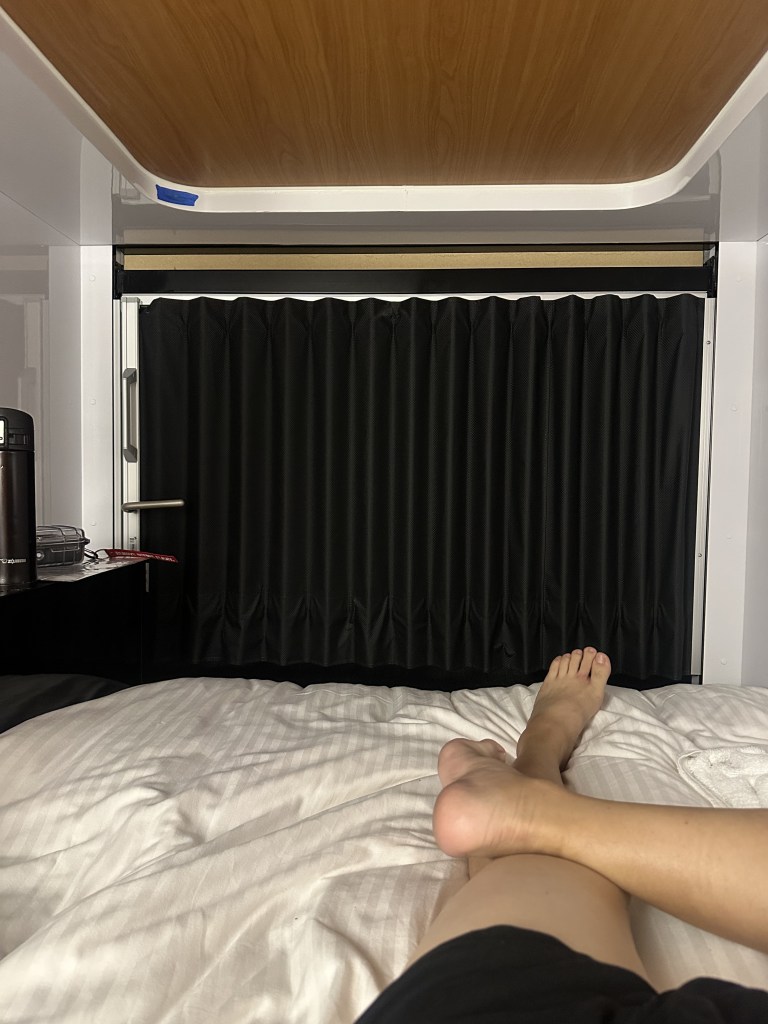
Each pod, or what I will call a kennel, has a footing to gain entry to the upper accommodation and a side portion to stow your shoes and luggage. But living amongst some of the shiestiest people in major US cities where trust is not a thing, I stored my TUMI suitcase and Chrome bag in with me and left only my slippahs on the outside. There is nothing stopping anyone from rummaging through your things, aside from a firmly worded warning and the threat of a $100 fine. Well, like gun laws, it’s not the law-abiding citizens you should be worried about; it’s the ones who don’t care about stealing. If they’re out to rob you, the deterrence of jail time is what they’re risking, so why would a fine deter them (it doesn’t)?
That night, I wanted to go out to eat, but due to the uncertainty and security of my accommodations, I made use of the charging ports, which were loose AF and would fall out if tugged on, so I turned to my phone to wind down instead and stayed put. Being in a place where I was tired and uncertain of my surroundings, I closed the front slider that had the bottom and top exposed. Not to the point anyone could look in, but because my caveman instincts made me do it, until I was later awoken by people’s incessant snoring. These kennels offer no soundproofing whatsoever, from their outer construction to the front slider.
Prior to going in, I thought, if they were sealed like a capsule, you’d have your own ecosystem that would insulate you a little from the world, or from the occasional throat-clearing, tapping on a phone while texting, to farting, or the worst: snoring, the gurgling and wheezing kind. Except that was not the case. However, I did manage to get back to sleep the first time around, but I was awoken a second time, so I showered and brushed my teeth early, by 4 to 5 a.m. (I know from my timestamped images), and it was not such a big deal since it was 8 to 9 a.m. for me, on my home time.
Also, being up so early after an irritating sleep, my brain did not register the tricolored, 100+-character notice on the door of the bathroom. If it had had a simple icon illustrating it was for ADA use only, I wouldn’t have used it (I did correct myself and did use the correct facilities thereafter). This weighed heavily on me after realizing it, because in Japan, rules are not to be broken, all the way down to jaywalking even on a desolate street. That sign, it’s very Japanese because it did what only a properly worded sign could do. Or a sign from a country that excels at street conemaxxing knows only a multicolored sign can get the job done right.
To maintain my cultural assimilation to the rules, I should point out that every time the door closes, there’s a loud click. So I attempted to hold the door handle open until it closed, gently and slowly letting it go to prevent it from clicking (it only worked 50% of the time), because sound attracts the creatures: the Death Angels, or the pressure of meiwaku, of being a nuisance to others, which as a kid, feels like the core of what my childhood was. But in this case, the design of the doors wasn’t going to save me.
Days two through three, I stayed in what they call the first-class cabin, which is one of the three types. The other two are the business-class cabin with more headroom (which I don’t think you need, but it just means no one is above you) and, like my initial stay, the premium-economy-plus cabin, which is like naming a compact car the premium compact luxury plus. The economy bins are strictly either female or male, but the first-class cabins are coed, or meant for multiple people. Throughout the stay, there was only the couple next to us because they had all their shoes set out front, the single dude from San Jose, CA, and, I think, a single female staying at the other end in the adjoining bins during our stay (if you go to the website, it’s the main image they use to market First Cabin, with the chairs lining the windows).
Now, the reason you’d want someone like me giving you my first impressions is that I not only know what it’s like to stay at moderately priced hotels, but I also know the seedier side of short-stay and cheap motels and how they’re used by the darker elements in the US. Traveling and having lived in the Bay Area and Los Angeles, I had two concerns going in: how is First Cabin going to deter 1. illegal drug use, and 2. illicit conduct or sexual acts? Especially in a spot with an all-men’s section, cuz “boys will be boys.”
It was also a concern to me because of what I experienced when traveling through the Bay Area for short stays along highway corridors where I needed to take a break. I had pulled over with my current girlfriend, and sometime in the middle of the night, someone banged on the door loudly. Looking through the peephole, I saw two dudes, and since it was a road trip, I had my handgun on me, so I quickly and quietly chambered a round in my Glock, not Hollywood-style, because the loud knock already elevated the tension. Having it in hand, I remember dealing with it by either opening the door or cracking it open, though I don’t remember exactly how it panned out. They were buyers, looking for the dealer who had been selling out of that room. We were just the next people in it. Dealers rent a room and work out of it, and the room stays on someone’s regular stop after they leave.
My experience is not purely anecdotal, because criminologists have identified budget motels as a primary hotspot for drug use, retail drug dealing, and associated property crimes. The majority of illicit commercial sex acts in the United States also occur within hotel and motel settings. Roughly 80 percent of forced commercial sex acts take place in motels or hotels. I can imagine Airbnb experiences that too, but this is about motels and especially affordable, cheap spots to stay, or I should say “budget and economy” spots.
Even in a spot or an area that is affluent, I saw a post about a location right off the highway (I think it was posted on Yelp or Instagram) detailing how one person had stayed and found a pipe, which the masses had no clue about, calling it a crack pipe. But what she held up was a bubble, and a bubble is used to smoke meth and is not used for marijuana or other drugs.
During the four days, the mix and types of people seemed to be fairly diverse, with some possibly using it as a work/stay spot because several seemed to be working in the lounge area with their laptops on remote calls. It was a mix of Asian, White, Black, and Latino, which almost covered the full spectrum in such a short stay (all in an age range from 20s to possibly 60s, from military, to a retired flight attendant on a shopping spree). No one seemed all that sketchy except for a younger Asian dude trying to sell tagged swim trunks to me in the lounge because he said his wife or girlfriend had purchased them, or some story, and he didn’t need them. The other interactions were, I want to say his name was Carlos, the dude from the Bay, was living in San Jose, CA, my old hood. He was one of the very few people who engaged us in conversation because his cabin was right next to ours, but most everyone kept to themselves, and the few who did gave a friendly smile in passing, such as the single older Caucasian female. Overall, I did not see any families, and I think it was mostly solo travelers. The only couple that stood out looked like a Japanese couple, because I saw them eating instant noodles one night. If it weren’t for my costly move, I would have liked to take them all out for dinner on my dime.
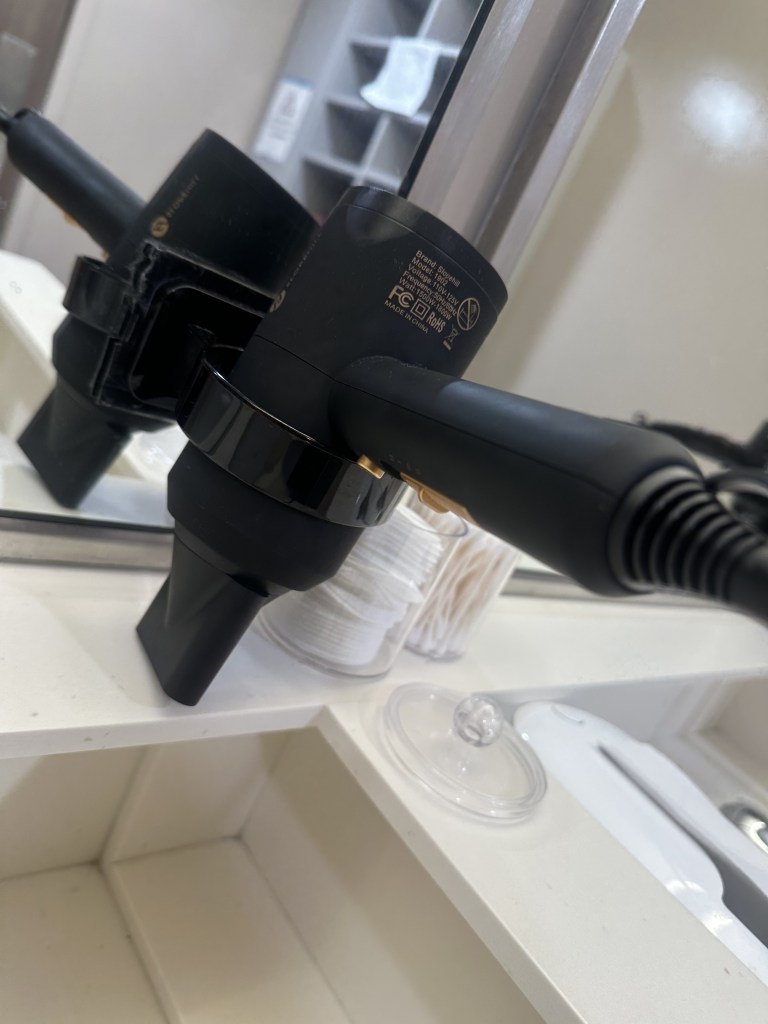
The bathrooms and showers, where you handle your business beyond just the sleeping quarters, are what most people would be concerned about. It was all good because the sink area is separated from both the toilet area and the shower area. There is no password required once you pass the main bathroom door to enter either side. Each facility is enclosed, in stalls, so you have privacy, and yes, the toilets come equipped with Japanese sphincter showers aka bidets. The showers are individually enclosed as well, which is also where people leave stuff behind; I actually found someone’s sunglasses left in one of the shower stalls and turned them in to the front desk. I didn’t adhere to the age-old American rule of ‘finders keepers, losers weepers.’ It is nothing like Starship Troopers with a big coed shower room or an open group toilet area, except for the sink area, which had five or six sinks lined up next to each other with mirrors out in the open. If you have a phobia of anyone watching you brush your teeth, that is one of the only shared spaces. Each section had a hair dryer, Q-tips, paper towel dispensers, soap dispensers, and a bin to discard your used shower or face towels. I was up at odd hours like 4 to 5 a.m. as well as during normal hours, and at no time were the bathrooms crowded. In fact, most times I barely heard or saw more than one person at a time. The lounge was the only area where you would occasionally see upwards of a half-dozen people at once.
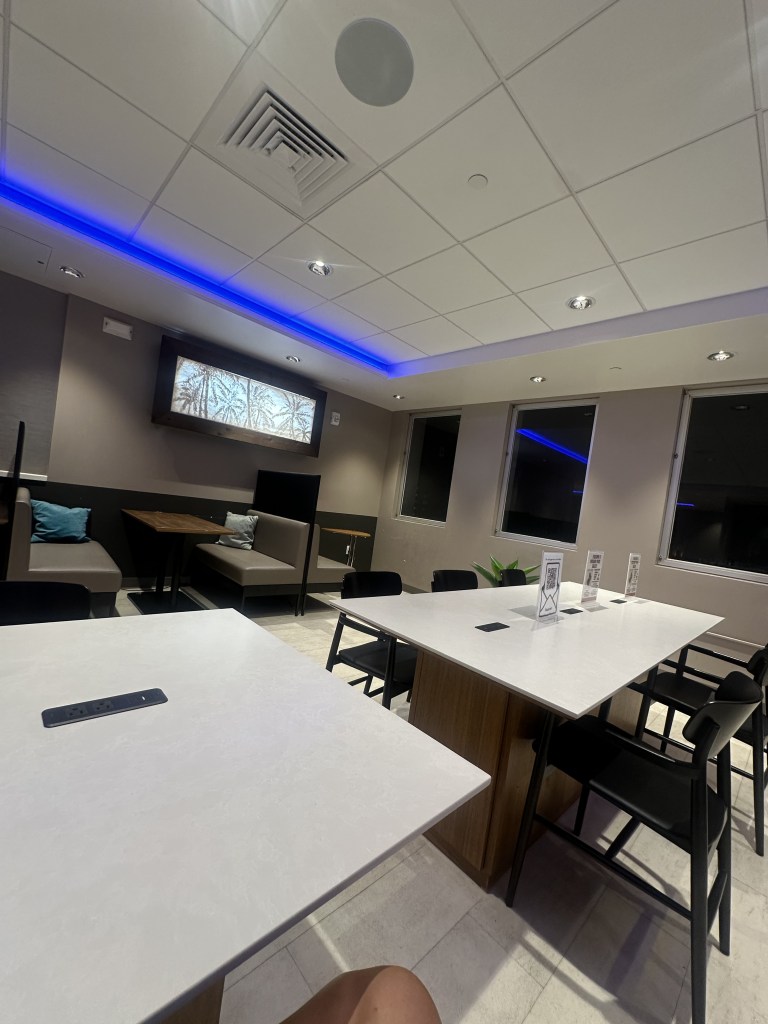
The lounge had one four-top bench-style seating area with several two-tops on one side of the room, a large middle-section table, and, on the window side, a bunch of single working areas. It’s also the area with free Wi-Fi, coffee, hot water, and cold water. It’s also the tell for the type of people staying, because the refrigerator was packed with labeled and dated items. I didn’t snoop, so I can only guess it was food because I could obviously see food items as opposed to my two to three beers I had stashed in it and a soda.
Now for my expectations and how they managed those expectations, which might not align with others’ expectations, which is why I always explicitly state mine. The branding is based on aircraft cabins, which to me is a novelty, because what is the upside of mimicking an aircraft cabin since it’s not a love hotel, and who thinks of air travel as the best place to sleep? It’d be like a Greyhound bus-themed hotel, which is not the ideal setting for snoo snoo or snooze snooze.
The first thought I had when plopping down, as I mentioned earlier, was not of it being first-class or premium. I liken it to a kennel because if you have ever seen the construction of one, it’s simply an outer plastic shell and a metal gate on the front. That is what you can expect, minus the lock being on the front. As for what I had hoped for, it’d be more of a capsule, like the ones that go to space or drop below the ocean waves. A kennel would not work in either of these environments because of the hostile environment of the vacuum of space and we humans not being able to breathe in either environment. In this environment, another potentially hostile environment of snoring and other noises, if you have ever watched the movie A Quiet Place, that is exactly what your experience will be like.
So, talking is solely reserved for the lounge, and the TV audio has to be set to your Bluetooth settings and is muted. By the way, when it comes to people’s technical ability, like our neighbor, he had to reach out to the front desk to have his headphones paired with the TV. Even with my so-called expertise level, I am sure it took me about 15 to 20 minutes to figure it all out, going through the TV settings, but I did not watch much TV, being on vacation and back in Hawaii.
Then there’s also this: if you’re a couple, there’s none of that unless you are stealthy AF, because the Death Angels will hear you, and after being awoken twice by snoring, I wish Death Angels did exist. That gets me to thinking: Why would their objective not be to design and fabricate these kennels to be as sound-deadening as possible?
Because aside from price and location, privacy (security) should be in the top three. Why the parenthetical security? Because part of the lack of privacy is due to the flimsy slider door that you cannot lock from the outside, and on the inside, it’s a flimsy, basic lock. So, when it comes to leaving for the day, all they give you is a small wooden bin that allows probably a couple of laptops, cash, and other valuables to be stowed and locked away. But on the mainland, what it does is give thieves an enticing opportunity, because the First-Class Cabin bins are not secured to anything. I unfortunately did not pay attention to whether there was that much camera surveillance in the general areas, but as someone who was on vacation, I didn’t pay much attention to how much of my privacy I was giving up because security was my primary concern during my stay. Also, I did leave some things with the front desk that they had no issue holding on to.
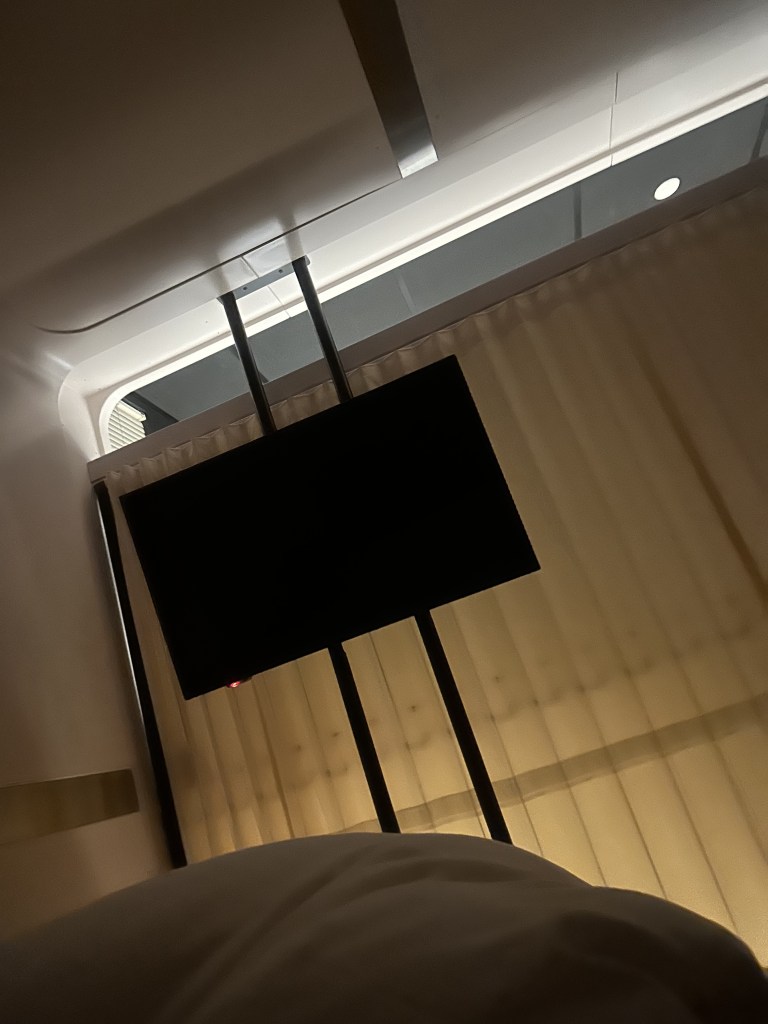
My biggest gripe, as an American who is used to being loud and obnoxious like Aussies, is the lack of insulation. If these kennels were partially or fully sealed on the front (ventilation is another story), it would allow for basic conversation. It would also muffle the snoring (which I had to contend with from the person I was with) and actually address the privacy and security issues.
So, I have to ask: what is the point of having your private space in the form of a pod, capsule, or kennel when it does not give you much benefit over an open space with a bunch of bunk beds stuffed into an old, repurposed apartment building? What I am referring to is a hostel, a place where I have never considered staying, but if I were to stay at one, I would choose the Waikiki Beachside Hostel, which is also located down the street, 0.7 miles away, and about a 5-minute walk. It is the opposite of the introvert’s “STFU, stick to yourself” style of First Cabin. WBH seems like a very communal, younger spot with a lot of interaction, nightly activities, a free pancake breakfast, friendly staff, and complimentary use of beach equipment like surfboards and snorkeling gear. For wheels, you have Hawaiian Style Rentals & Sales right next door to rent a bicycle.
A dedicated day rental is something I would have appreciated, because I am very comfortable on a bike. Instead, I took a Biki, a public-private-nonprofit partnership with the State of Hawaii and the City & County of Honolulu (I saw the 1.5 app rating and thought, “Oh, yeah, we’ll see about that”). I took the bike up to Punchbowl (the National Memorial Cemetery of the Pacific) to visit my uncle and aunt’s gravesite. I rode there in a total downpour, which I didn’t mind so much, but the bike service only allows you to use the bike in 30-minute increments or point-to-point, so I was charged over $50 (I could’ve rented a scooter for the full day for $53, or better yet, a Ferrari and just valet it to not match the typical user). That 1.5 rating is well deserved.
The last aspect is comfort, and everything I love hotels for, First Cabin didn’t deliver on the core of it, which is a somewhat comfortable mattress, down to the bedding. If it were an air mattress, and they should encourage guests to have their own sleeping bags and pillows, I can guarantee you, I would have slept better (well, combined with the snoring, it would have made it more bearable). My guess as to why they have the disposable-like mattress and sheets is that it’s a cost issue and a laundry services thing, but I think I could have slept better in an IKEA showroom.
Each element delegates enforcement to guest behavior where a US-ready product would delegate it to design. The obvious hurdle is culture, and it is highlighted all the time in social media posts of quiet, crowded train cars filled with Japanese citizens staring off into space, scrolling on their phones, nodding off, after a night of drinking with coworkers, sukebe activities, etc. By contrast, in the US, it’s a complete circus and a free-for-all of people on their phones, dancing, yelling, fighting, from eating to even cooking, and doing drugs. Anything you can think of, it’s all done on American public transit, and Dave Chappelle has a good bit on what one dude was doing publicly on a bus. I cited train cars, but from Spirit Airlines to Carnival Cruise Lines, that drama isn’t confined only to the ground.
It’s also why, throughout the US, the aforementioned major cities in particular do not have public bathrooms without them costing over a million dollars each and becoming notorious hubs for illicit drug use and prostitution. In a free culture, wrangling and implementing public spaces to bathrooms, a large burden is delegated to design.
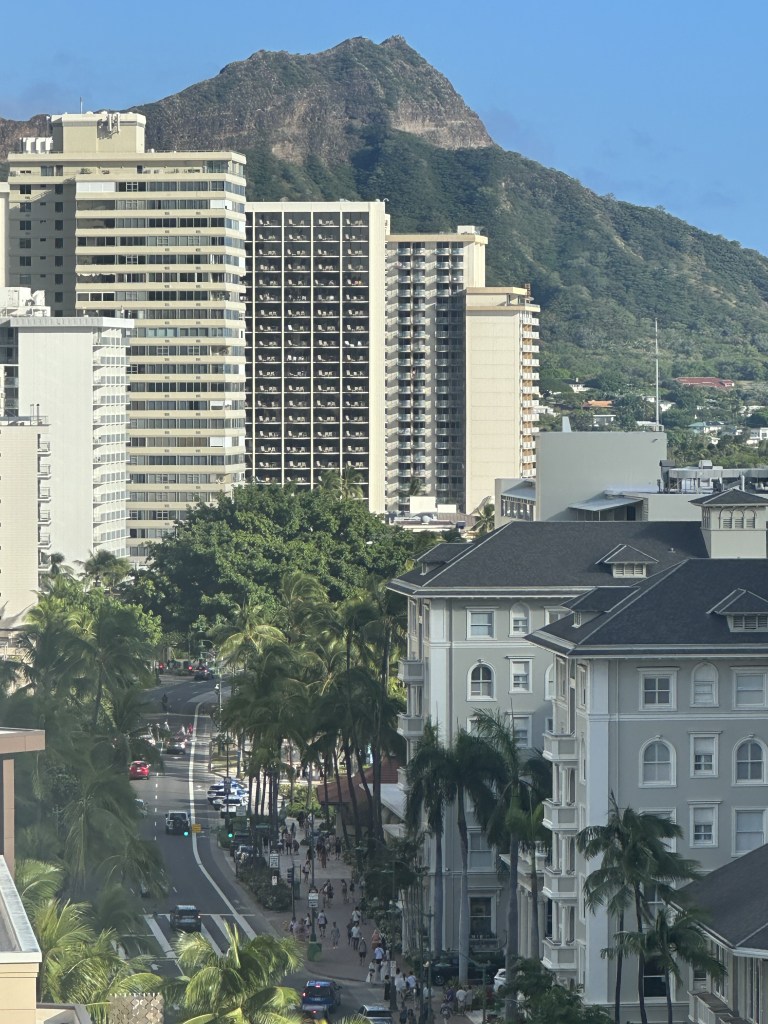
Hawaii is not the mainland, and like Japan, it’s an island. Geography does the filtering in both places, just differently: in Japan, it shaped the culture that now does the enforcing, and in Hawaii, it screens the guests before they ever reach the shores, let alone the doors. The people who stay at First Cabin wanted a cheap bed but could still afford a flight to Hawaii, so they weren’t the walk-in, drive-up population that budget motels draw. On the mainland, there is no ocean to do that work, so the building has to.
My bet is that if First Cabin were to consider expanding to the mainland, they would still target San Francisco, New York, and possibly Los Angeles, even though the average public toilet is $3.6 million in NYC, which exemplifies how local governments have to throw money at it because of how much of an issue it is.
If the economy of Vegas does not totally tank, I’d also add Sin City because who needs an actual room in Vegas (my Vietnamese homies and their uncles and aunties know this), and the only other spots I would add would be resorts or ski areas, like my other hood, Colorado, and Aspen, Vail, and Breckenridge might be a better move than the other three cities because the culture is manageable (I threw in Breck because of my bias, but Telluride would probably be the best bet), since, like Hawaii, the location is doing half the work.
However, I have no background in this industry, and I am unaware of the other factors, and the only thing I can contribute is knowing us Muricans and human nature and shiesty focks and knowing the difference between a marijuana pipe, a crack pipe, and a meth pipe. Oh, and snoring unfortunately is not bound by culture.
Mahalo for reading 🤙